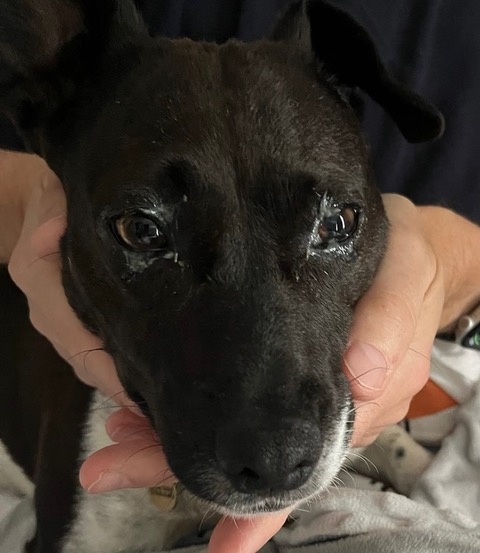
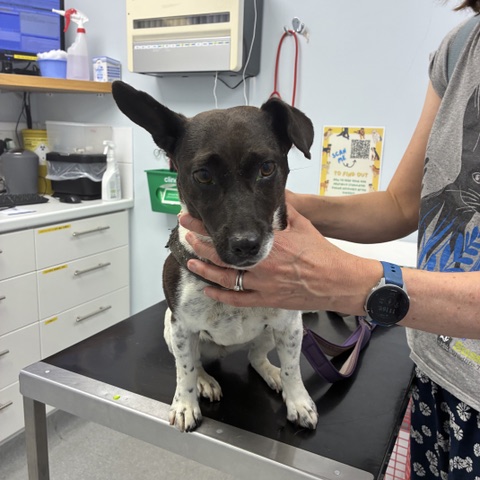
I have conjunctivitis
My local vet confirmed it today, and I’m on Exocin (a human antibiotic eye drop) three times a day until it clears (and then 2 more days). If that doesn’t fix it, a sample and more drugs. But it’ll probably fix it.
Before this, Dr Amanda at FirstVet wrote the following glowing testimony of me and my eyes:
History
- Gunkey eyes, about the 6th day. Started with the left eye, initially clear/white ocular discharge, now progressing to yellow mucopurulent discharge
- Then spread to right eye Breezy not bothered by it, not scratching at eyes
- Not sneezing
- Breathing normal
- eating and drinking
- normally bright and happy in self
Current status
- Very bright and alert sweet girl
- no blepharospasm (squinting)
- large amount mucopurulent ocular discharge
- bilaterally marked conjunctival hyperaemia (reddening of the whites of the eyes)
- bilaterally pupils normal sized and symmetrical, when taken into a dark space normal pupillary dilation observed difficult to assess iris but no obvious signs of uveitis
Differential diagnoses / assessment Recommendation
Bilateral conjunctivitis - bacterial most likely
What we talked about today:
Breezy appears to have bilateral conjunctivitis (inflammation of the soft tissues around the eye), likely due to a transient infection.
What you should do now:
- Use cotton wool pads soaked in warm water (boiled water that you have allowed to cool to a temperature that is comfortable on your own skin) or use Vetericyn VF Ophthalmic Wash, Contego Eye Spray, a sterile saline or make a dilute saline solution by adding a teaspoon of table salt/fine sea salt to 500ml of warm water to clean their eye at least three times a day.
- Always hold the pads on your dog’s eyes to soften any discharge, allowing it to loosen before trying to remove it. Use a separate pad for each eye to avoid transmitting infection from one eye to the other
- Wash your hands before and after. As discussed, Breezy currently has a superficial conjunctivitis, however there is quite a lot of discharge and the eyes look quite sore. To avoid this worsening, I recommend she sees your vet tomorrow for assessment of the eye and likely antibiotic eye drops to help resolve the infection.
Things you should look out for:
- Any changes to the surface of the eye e.g. blue or grey haze, rough appearance
- Increasing amounts of discharge, swelling or redness
- Yellow or green eye discharge, particularly if sticking the eyelids together
- Squinting / unable to open eye
- Persistently rubbing or pawing at the eyes
- Red or irritated eyes
- Sneezing or nasal discharge
- Becoming lethargic or not wanting to eat
Thank you for making an appointment with FirstVet today. I hope you found the consultation helpful.